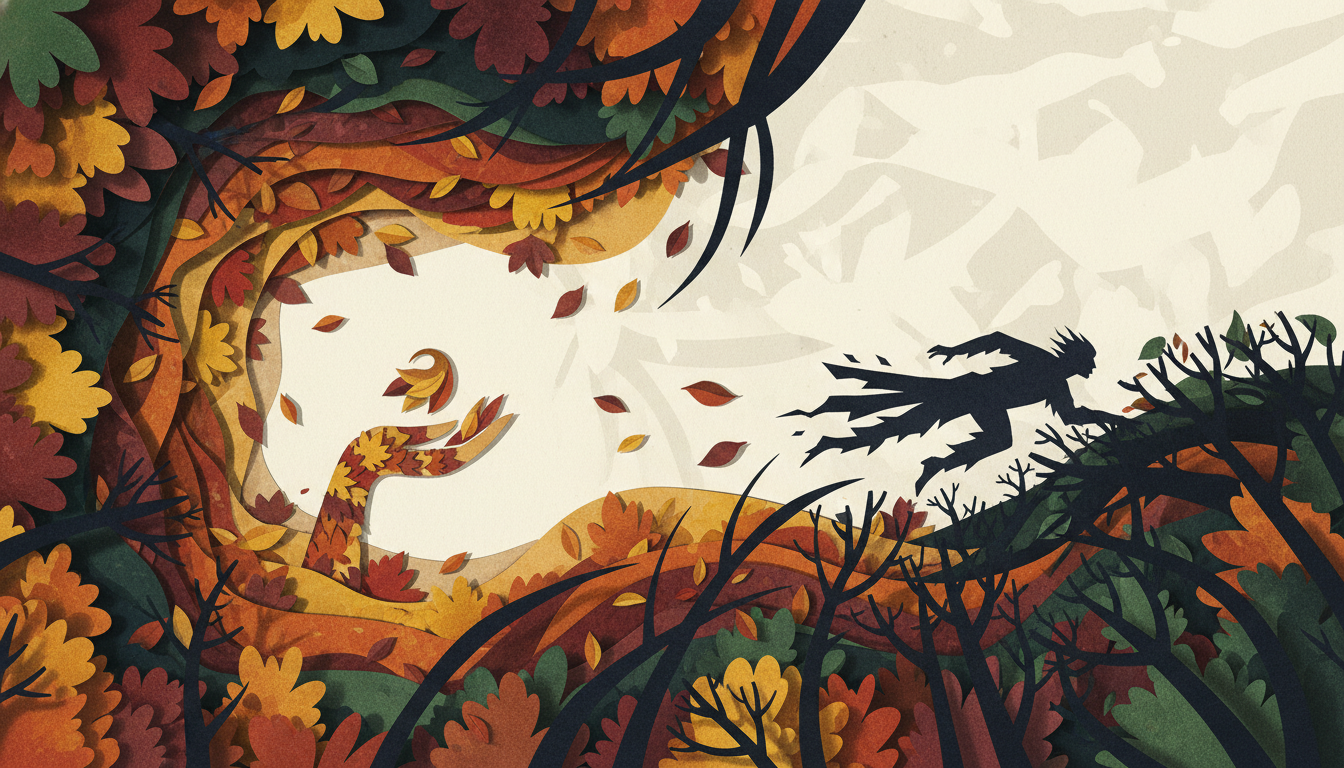
We live in an age of paradox. Never before have we had such abundance—more experiences available, more connections possible, more moments to capture and share. Yet anxiety about losing it all has never felt sharper. We scroll through social media, comparing our present to others' curated highlights, terrified that we're missing out. We cling to relationships, fearing abandonment. We hoard experiences like they might evaporate. In our desperate attempt to hold onto joy, we often miss it entirely.
Mindfulness offers a different path. Rather than fighting the transient nature of life, it invites us to embrace it. By learning to savor the present moment while accepting impermanence, we paradoxically free ourselves from the very fear that drives our grasping.
Key Takeaways
- Mindfulness transforms your relationship with the present by dissolving the tension between enjoyment and fear of loss
- Present moment awareness naturally reduces anxiety because the "now" is always safe and complete
- Gratitude practices and acceptance of impermanence work together to deepen your capacity for joy
- Letting go techniques rewire your nervous system away from scarcity thinking
- Regular practice creates lasting psychological resilience against existential dread
Understanding the Fear of Loss: Why We Struggle to Be Present
The fear of loss is deeply wired into human neurobiology. Our ancestors needed to be hypervigilant about losing resources—food, shelter, tribe members—in order to survive. That ancient neural pattern persists in modern nervous systems, now triggered not by predators but by the thought that good things won't last.
Psychologists call this "anticipatory anxiety." We're not actually suffering in the present moment; we're suffering in our imagination about a potential future. A beautiful sunset becomes a vehicle for sadness because we know it will end. A conversation with a loved one is tinged with dread because we know they might die. A promotion feels hollow because we fear we'll lose the job.
This mental habit robs us twice: once through the imagined future loss, and again through our inability to fully inhabit the only moment we actually have access to—right now.
The irony is that clinging—trying desperately to hold onto moments, people, or experiences—actually creates the disconnection we fear. When we're gripped by "I must keep this forever," we're not truly with what we're experiencing. We're in our heads, performing a mental gymnastics routine to prevent loss that we can't actually control.
Present Moment Awareness: The Foundation of Savoring
Mindfulness begins with a simple but profound reorientation: noticing what's actually happening, as it's actually happening, without the filter of judgment or fear.
Present moment awareness is different from distraction. You might be fully distracted by your phone while physically present at dinner, or you might be physically at work while mentally rehearsing a difficult conversation. True present moment awareness means all three dimensions—body, mind, and attention—are aligned in the now.
When you're genuinely present, something remarkable occurs: the present moment is always safe. In the actual now, you're breathing. Your heart is beating. You're alive. The roof hasn't collapsed. The relationship hasn't ended. The worst hasn't happened.
This isn't positive thinking; it's simply noticing reality. Future catastrophes don't exist yet. Past losses have already happened and can't be changed. Only the present moment is available for your actual experience.
This distinction is liberating. When anxiety arises—and it will—you can name it: "This fear is about tomorrow. But I'm asking myself to be here, now. And right now, I'm okay."
The practice of present moment awareness doesn't require emptying your mind or achieving some blissful state. It simply means choosing, over and over, to place your attention on direct sensory experience: the warmth of coffee on your hands, the sound of birdsong, the feeling of your feet on the ground, the taste of food you're actually chewing instead of mechanically swallowing while thinking about your inbox.
Each time you bring attention back to the present, you're strengthening the neural pathways that interrupt the fear-of-loss cycle. You're training your brain that the present is where safety and joy actually reside.
Gratitude Practice: Amplifying Joy Through Appreciation
Gratitude and mindfulness are complementary practices, and when combined, they create a powerful antidote to the fear of loss.
Here's why gratitude works: when you deliberately appreciate something, you're simultaneously acknowledging that it's temporary. Gratitude inherently contains acceptance of impermanence. "I'm grateful for this meal" contains within it the knowledge that this meal will be consumed and gone. "I'm grateful for this person" honors their presence while accepting that our time together is finite.
This might sound melancholy, but it's actually the opposite. Research shows that people who regularly practice gratitude experience greater life satisfaction, better sleep, improved relationships, and lower anxiety. The awareness of impermanence doesn't diminish their appreciation; it deepens it.
A gratitude practice doesn't require expensive journals or elaborate rituals, though those can help if they appeal to you. The simplest version: several times a day, mentally note three things you're grateful for in the present moment. Not grand things—small moments count. The way sunlight falls on your desk. A text from a friend. A moment when you felt capable. The absence of pain in your body.
The more specific and sensory your gratitude, the stronger the effect. Instead of "I'm grateful for my home," try "I'm grateful for the cool smoothness of this wooden banister under my hand and the smell of coffee coming from the kitchen." This specificity anchors gratitude in actual present-moment experience rather than abstract appreciation.
Over time, consistent gratitude practice rewires your nervous system's default setting from scarcity ("What might I lose?") to abundance ("What do I already have?"). This shift happens gradually, but it's profound.
Acceptance of Impermanence: The Buddhist Core of Letting Go
One of Buddhism's central teachings is anicca—the principle that all conditioned things are impermanent. Nothing lasts. This isn't meant as a depressing reminder; it's meant as a liberation.
When you stop fighting the reality of impermanence, enormous energy is freed up. That energy was going into denial, resistance, and fear. Now it's available for presence and joy.
Acceptance of impermanence doesn't mean becoming nihilistic or believing nothing matters. It's the opposite. When you truly accept that moments are temporary, that relationships have finite duration, that your own life will end, everything becomes more precious, not less.
Think of cherry blossoms in Japanese culture. The entire aesthetic celebration around these flowers stems from the fact that they bloom for only a few weeks. Hundreds of years of art, poetry, and pilgrimage tradition exist specifically because of their impermanence. If cherry blossoms lasted all year, they wouldn't inspire the same rapture.
This principle applies to your life. The dinner with your family matters so much because it's a specific night that will pass. The friendship carries such value because you can't take each other for granted. Your own vitality and health are worth appreciating because they're not guaranteed to last.
Accepting impermanence is liberating because it releases you from the impossible task of controlling reality. You can't prevent change. You can't freeze moments. You can't ensure that good things last forever. Recognizing this isn't depressing once you stop fighting it; it's actually relieving. You were never supposed to be able to do those things.
What you can do is show up fully while you're here, and appreciate what's unfolding now.
Practical Exercise: The Five-Minute Savoring Practice
This exercise combines present moment awareness, gratitude, and acceptance of impermanence into a integrated practice. You can do it daily, or whenever you want to deepen your experience of a particular moment.
Setup: Choose a sensory experience you'll do this week—a meal, a cup of tea, a walk, time with someone you care about, or even a simple activity like showering. Decide in advance that you'll give it five minutes of full attention.
Step 1 (1 minute): Arrival
Before you begin the activity, pause. Close your eyes briefly. Notice your breath. You're about to have an experience. Set an intention: "I'm going to be fully present for this."
Step 2 (2-3 minutes): Full Sensory Engagement
Engage all five senses. If it's food, notice the colors, textures, aromas before tasting. Feel temperature, taste flavors in detail, listen to any sounds. If it's a conversation, notice their expressions, tone of voice, the feeling of being listened to or heard. Slow down deliberately.
Step 3 (1 minute): Gratitude and Impermanence
As you're engaged in the experience, silently note: "I'm grateful for this moment." Then add the truth: "This moment is passing. This experience is temporary. I will never have this exact moment again." Notice how this awareness, rather than diminishing your experience, somehow intensifies it.
Step 4: Closure
When the five minutes end, pause again. Notice how you feel. You've just proven to yourself that presence is possible, and that accepting impermanence doesn't prevent joy.
Making it stick: Practice this weekly with different experiences. Over time, you'll begin to bring this quality of presence to more moments naturally, without needing to set a timer.
Letting Go Techniques: Releasing the Grip of Fear
Fear of loss manifests as gripping—mentally and emotionally holding on to people, experiences, outcomes, and identities. This gripping is exhausting, and ironically, it creates the very suffering we're trying to prevent.
Several techniques can help you recognize and release this pattern:
The Grip Release Metaphor
Literally make a fist, gripping your hand as tightly as possible. Feel the tension. Now slowly open your fingers and straighten your hand. Feel the relief. This physical sensation mirrors what happens emotionally when you stop gripping. You can do this anytime you notice anxiety rising.
Naming Vs. Identifying
When fear arises ("I'm going to lose this"), pause and reframe: "I'm having the thought that I might lose this" or "Fear is present right now." This tiny shift from identification to observation creates psychological distance. You're not the fear; you're observing it. It's a weather pattern passing through, not your identity.
The Impermanence Inventory
List five things you fear losing: a relationship, a job, your health, a friendship, your youth. For each, ask yourself: "Is this currently happening?" If the answer is no, you're suffering about a future that hasn't occurred. Then ask: "If this were to happen, could I survive it, adapt, and rebuild?" Most of the time, the honest answer is yes.
Radical Acceptance Statement
Create a personal statement acknowledging what you can't control: "I can't prevent change. I can't control whether people stay in my life. I can't guarantee outcomes. What I can control is how present I am and how much gratitude I offer for what's here now." Return to this when fear peaks.
These techniques work because they interrupt the loop of denial-and-gripping and replace it with honest acknowledgment. Paradoxically, accepting that we might lose something is less frightening than the constant effort to prevent that loss.
The Neuroscience of Mindfulness and Fear Reduction
Understanding what's happening in your brain can strengthen your commitment to practice.
When you're in fear-of-loss mode, your amygdala (the brain's threat-detection center) is activated. Your nervous system is in fight-flight-freeze mode. Blood flow decreases to your prefrontal cortex (the thinking brain) and increases to your primitive brain (the survival brain). In this state, you're not capable of clear thinking, genuine connection, or true enjoyment.
Regular mindfulness practice literally shrinks the amygdala and increases gray matter density in the prefrontal cortex. Your brain becomes better at recognizing false alarms. Neuroimaging studies show that long-term meditators have increased activity in brain regions associated with emotional regulation and present-moment awareness.
Importantly, this isn't about achieving some permanent blissful state. It's about building resilience—the capacity to notice fear, acknowledge it, and not be governed by it.
Each time you practice present moment awareness, you're training your nervous system that safety is available now. Each time you practice gratitude while accepting impermanence, you're teaching your brain that joy and change aren't opposing forces—they're intertwined.
Integrating Mindfulness Into Daily Life
The challenge isn't understanding these concepts; it's building consistent practice. Here's how to make mindfulness sustainable:
Start small. Five minutes is better than twenty minutes that you don't actually do. Choose one specific time and trigger: every morning with your coffee, every lunch break, every evening before bed.
Track your practice. Even a simple check-mark on a calendar creates accountability and motivation.
Notice the effects. After two weeks of consistent practice, pay attention to whether anxiety has decreased, whether you're more present in conversations, whether moments feel richer. These observations strengthen your commitment.
Get support. Having a practice partner or joining a meditation group dramatically increases adherence. If you're new to mindfulness and want a structured approach to building awareness throughout your life, consider taking a free assessment with Innr to explore how mindfulness and self-awareness practices could support your specific needs and life circumstances.
Extend mindfulness beyond formal practice. Mindful eating, mindful walking, mindful listening—every activity is an opportunity. The more you practice, the more natural it becomes.
The shift from "I must hold onto everything" to "I can fully enjoy this while it lasts" is one of life's most liberating transformations. It doesn't happen overnight, but it builds with practice.
FAQ
What's the difference between mindfulness and meditation?
Meditation is a formal practice, usually sitting in a quiet space, training your attention. Mindfulness is the result of that training—an ongoing capacity to be present and aware in daily life. You can meditate without becoming mindful, but mindfulness always involves some form of meditation practice to develop the skill.
Will accepting impermanence make me depressed or nihilistic?
Quite the opposite. Research shows that people who accept impermanence and practice gratitude report higher life satisfaction. Acceptance actually reduces the exhausting resistance that creates depression. You're not believing nothing matters; you're recognizing that because things are temporary, they matter even more.
How long before I notice changes in my anxiety?
Many people notice immediate calming from a single mindfulness session. Lasting change in how your nervous system responds to stress typically takes 4-8 weeks of consistent practice. Brain imaging shows measurable changes in 8 weeks of regular meditation.
Can mindfulness replace therapy or medication?
Mindfulness is a powerful complement to professional mental health treatment, but not a replacement. If you're experiencing clinical anxiety, depression, or trauma, work with a mental health professional. Mindfulness and professional treatment work beautifully together.
What if I'm "bad at" mindfulness because my mind keeps wandering?
Wandering minds are completely normal—even experienced meditators experience this. The practice isn't about having a blank mind; it's about noticing when your attention has wandered and gently bringing it back. That noticing and returning is the actual practice. You're not failing; you're succeeding.
The fear of loss will likely always be part of the human experience. But it doesn't have to govern your present. Through consistent mindfulness practice, present moment awareness, gratitude, and acceptance of impermanence, you can transform your relationship with time itself. The paradox is beautiful: by accepting that everything changes and nothing lasts, you become free to genuinely enjoy what's here now.
Start today. Set a timer for five minutes. Put your phone away. Notice what's actually happening. The moment you stop fighting reality, you might just find that it's enough.