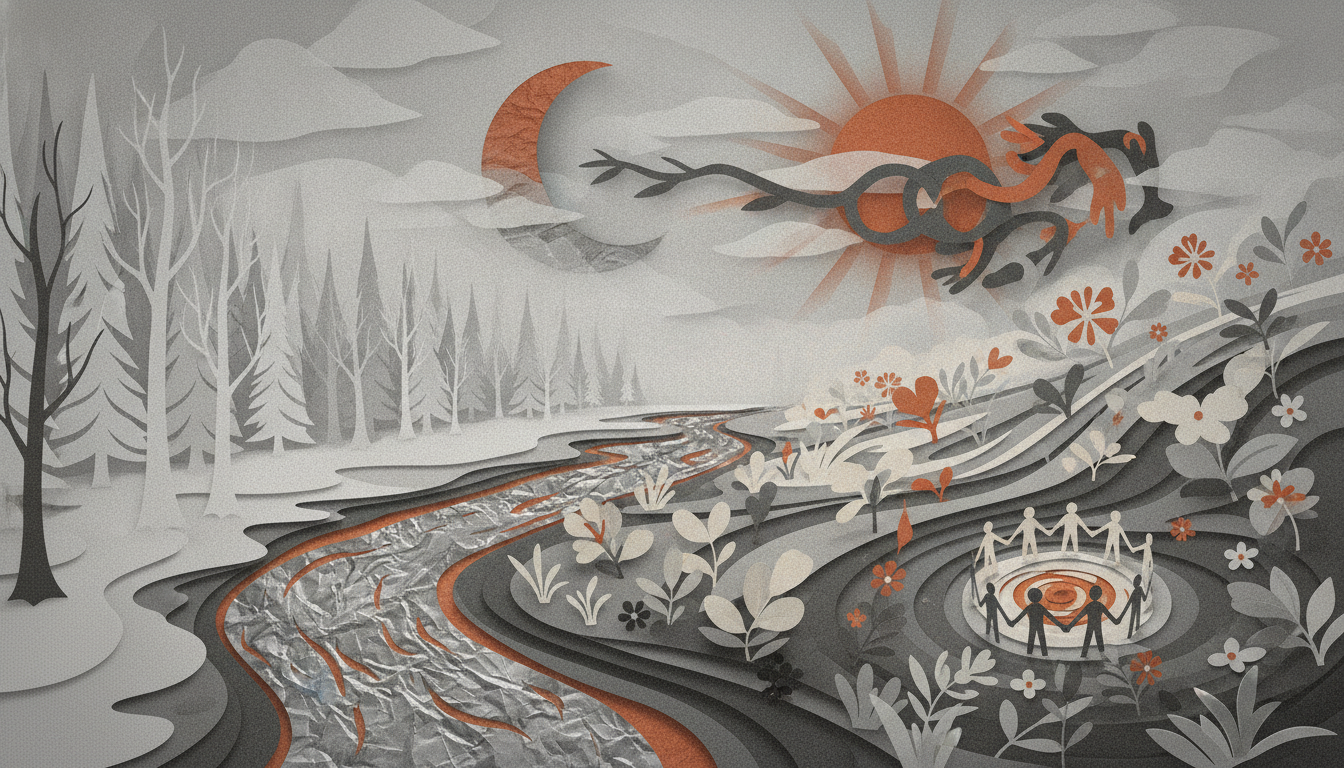
In a world that often emphasizes individual achievement and self-sufficiency, there's a quiet revolution happening in communities around us. People are discovering that genuine wellbeing isn't something we achieve in isolation—it's something we build together. This is the essence of a mutual aid mindset: the recognition that we're interdependent, that our struggles are often shared, and that the solutions we seek are often found in connection with others.
The mental health crisis we're experiencing today isn't just individual; it's collective. Loneliness has become an epidemic, even as we're more "connected" than ever through technology. What many of us are missing is authentic community support—the kind where we both give and receive, where vulnerabilities are met with understanding rather than judgment, and where belonging isn't something we earn but something we create together.
Key Takeaways
- Interdependence is strength: Moving beyond the myth of total self-sufficiency allows us to build resilience through shared support
- Mutual aid reduces isolation: When we both give and receive help, we strengthen community bonds and combat loneliness
- Collective wellbeing elevates individual health: Supporting others creates meaning, purpose, and psychological benefits for everyone involved
- Belonging is built, not found: A mutual aid mindset requires intentional practice and vulnerability
- Small acts compound: Everyday exchanges of support transform how we experience community and our place within it
Understanding the Mutual Aid Mindset
A mutual aid mindset is fundamentally different from charity or one-directional help. It's based on the principle that we all have something to offer and something we need. In a true mutual aid framework, the wealthy person and the struggling person, the experienced mentor and the learning newcomer, the extrovert and the introvert—each brings value and each receives support.
This isn't about pretending everyone has equal resources or abilities. Rather, it's about recognizing that interdependence is the human default. We begin life dependent on caregivers. We need teachers, friends, healthcare providers, and communities throughout our lives. Yet somewhere along the way, many of us internalized the message that needing help is weakness, and that true strength means going it alone.
The mutual aid mindset reframes this narrative. Strength is found in our capacity to ask for help and to offer it. Resilience emerges not from isolation but from connection. When we recognize that everyone struggles—that the colleague who seems to have it all together also feels overwhelmed sometimes—we stop seeing our own challenges as personal failures and start seeing them as part of the shared human experience.
This shift has profound implications for our mental health. Research consistently shows that social connection is one of the strongest predictors of psychological wellbeing and even longevity. Yet many people don't know how to access genuine community support or how to offer it to others. A mutual aid mindset provides both the framework and the invitation to do so.
From Loneliness to Belonging: The Power of Social Connection
Loneliness has become such a defining feature of modern life that the surgeon general of the United States declared it a public health epidemic. Interestingly, loneliness isn't about being alone—it's about feeling disconnected from others and from community.
The antidote to loneliness isn't just having more people around us. It's having relationships and communities where we feel truly known, where we can be authentic, and where we matter. This is what belonging creates. And belonging is built through mutual aid.
When you help someone through a difficult time, you're not just affecting them. You're affirming that you're part of an interdependent web of care. When someone helps you, you experience the relief of knowing you don't have to carry everything alone. Both of these experiences—giving and receiving—are essential to creating belonging.
The mutual aid approach to community support is particularly powerful because it doesn't create a hierarchy of "helpers" and "helped." Instead, everyone is both. The single parent who babysits for a friend while that friend handles a medical crisis. The recovered person sharing their experience with someone newly struggling. The person with time sharing it with someone who has money but not bandwidth. Each exchange reinforces the truth that we're all valuable, all needed, and all part of something larger than ourselves.
This kind of community support also creates resilience at a collective level. When societal stress hits—economic uncertainty, health crises, political polarization—communities with strong mutual aid practices are more equipped to weather the storm. They don't rely on distant institutions alone; they have each other.
Building Interdependence in Everyday Life
Moving from a mindset of independence to one of healthy interdependence requires both mindset shifts and practical changes to how we live.
Acknowledge your actual needs. Start by getting honest about what you actually need help with. Many of us are taught to minimize our needs or to be stoic about struggles. But naming your needs—whether that's help with childcare, a listening ear about work stress, or assistance with a practical task—is the first step. It also gives others permission to name their needs.
Create spaces for vulnerability. Mutual aid thrives where people feel safe being real. This might mean starting a small group that meets regularly to talk about challenges, creating a shared document where neighbors list what they need and can offer, or simply being more honest in your existing relationships. When you share something genuine, you create the conditions for others to do the same.
Think of your gifts broadly. You don't have to be a therapist to offer support. Do you have a car? You can offer rides. Do you have a skill in cooking, budgeting, tech, or handywork? You can teach or help. Do you have time? You can listen. Do you have experience navigating something difficult? You can share what you learned. Reframe your sense of what you have to offer.
Start small. You don't need to overhaul your entire life. Join or start one group. Make one commitment to regularly check in with a friend. Offer one specific kind of help and become known for it. Small acts of mutual support compound over time and gradually reshape your sense of belonging.
Resist perfectionism in your offerings. You don't have to be an expert or have it all figured out to help. Sometimes the most powerful support is simply showing up imperfectly—bringing a meal that isn't Instagram-worthy, listening without having all the answers, or admitting "I don't know, but I'm here with you."
Overcoming Barriers to Mutual Aid
Even with the best intentions, building a mutual aid practice faces real obstacles. Understanding these barriers helps us navigate them.
Shame and stigma. Many people were raised to hide struggles and to be ashamed of needing help. Overcoming this requires repeatedly choosing vulnerability, seeing that it doesn't lead to rejection, and gradually building trust.
Busy lives and fragmentation. Modern life often isolates us into separate spheres—work friends, neighborhood acquaintances, online communities. True mutual aid requires some continuity and depth. This means being intentional about where you invest relational energy.
Trauma and relational patterns. If you've been hurt by people you trusted, the idea of interdependence can feel risky. Healing this often requires patience, smaller steps, and potentially therapeutic support to rebuild trust.
Structural inequality. Mutual aid isn't color-blind or class-blind. Effective mutual aid practices acknowledge power differences and work intentionally to ensure all voices are heard and needs are met.
Compassion fatigue. People who naturally care a lot can burn out if they're always giving without receiving. A true mutual aid practice includes self-care and boundaries.
Creating Your Mutual Aid Practice: A Practical Exercise
Here's a concrete way to begin building a mutual aid mindset in your own life:
The Mutual Aid Inventory (20-30 minutes)
-
Needs Assessment: On one side of a paper or document, list 5-10 things you need help with. These might be practical (help with yardwork, childcare, a ride to an appointment), emotional (someone to talk to about anxiety, accountability for a goal), or informational (learning how to budget, understanding a health condition).
-
Gifts Inventory: On the other side, list 5-10 things you could offer to others. Think broadly: your time, skills, knowledge, experience, resources, connections, or simply your listening ear.
-
Identify Intersections: Look for places where your needs might align with someone else's gifts, and your gifts might address someone else's needs. These are your mutual aid opportunities.
-
Choose One Action: Pick one thing from your needs list and one person or group you could ask for help. Also pick one gift you could offer and one person who might benefit from it. Make concrete plans for both this week.
-
Reflect and Repeat: Notice how it feels to both give and receive. What resistances came up? What felt good? Adjust and repeat.
Many people find that this simple exercise clarifies how much capacity they actually have for mutual support and how much their community needs what they have to offer.
Collective Wellbeing as Individual Medicine
Here's a truth that might seem counterintuitive: prioritizing collective wellbeing is one of the most effective things you can do for your individual mental health.
When you're part of a community practicing mutual aid, you experience:
- Reduced anxiety: Knowing others have your back and that you have a role in supporting them creates a sense of safety
- Increased meaning: Contributing to others' wellbeing provides purpose
- Greater resilience: You have people to turn to and practices of support already in place when difficulties arise
- Enhanced self-worth: Being needed and being a reliable helper strengthens your sense of value
- Protection against depression: Social engagement and feeling part of something larger than yourself are protective factors against depressive episodes
From a neuroscience perspective, acts of kindness and support activate reward centers in our brains. Giving and receiving help literally makes us feel better and helps us live longer.
When we shift from viewing wellbeing as an individual achievement to understanding it as something we create collectively, everything changes. Your mental health is no longer just your responsibility; it's something we share responsibility for. And everyone's wellbeing becomes, in some way, your wellbeing.
FAQ: Mutual Aid Mindset and Belonging
What's the difference between mutual aid and just helping friends?
Mutual aid is more intentional, reciprocal, and often involves broader communities. While helping friends is valuable, mutual aid creates structures where helping and receiving help are normalized for everyone, not just between individuals who happen to be close. It also often addresses systemic issues collectively rather than only individual problems.
How do I start a mutual aid group if none exists in my community?
Begin by identifying others who share a specific need or concern—parents wanting childcare support, people managing chronic illness, folks interested in food security, or simply neighbors wanting to build community. Start with a simple meeting (even virtual) to explore common needs and gifts. Many successful mutual aid groups grow from these small beginnings. Platforms and resources like innr.app can help you clarify your own needs and strengths before organizing with others.
Isn't asking for help a burden on others?
This reflects the very independence mindset that mutual aid seeks to transform. When you ask for help, you're actually giving others the opportunity to experience the meaning and fulfillment that comes from contributing. You're also creating reciprocity—when others see you asking for and receiving help, they feel more comfortable doing the same. Mutual aid only works when everyone practices both asking and offering.
Can mutual aid work in digital communities?
Absolutely. While in-person community has unique benefits, mutual aid groups thrive online too. Digital communities allow people who might be isolated geographically, mobility-limited, or socially anxious to participate. The key is creating enough trust and structure that real reciprocity develops, not just transactional exchanges.
How do I protect myself from burnout or from helping the wrong people?
Healthy mutual aid includes boundaries. You can't help everyone with everything. Choose a few ways you like to contribute and stick with them. Communicate clearly about what you can and cannot do. Build reciprocity into your relationships—if you're always giving and never receiving, that's not mutual aid. If someone consistently takes advantage, you can compassionately step back. Self-care isn't selfish; it's essential to sustainable mutual support.
Starting Your Mutual Aid Journey
Building a mutual aid mindset doesn't require waiting for perfect conditions or for someone else to lead. It starts with you—with recognizing your interdependence, naming what you need and what you have to offer, and taking small steps toward connection.
The shift from isolation to belonging is profound. It's not just about feeling less lonely, though that matters. It's about recognizing ourselves as part of an interconnected human community where our struggles are shared, our gifts are needed, and our belonging is not something we have to earn but something we create together.
If you're feeling uncertain about where to start or what support you actually need, consider beginning with a free assessment that can help you clarify your wellbeing needs and strengths. From there, you can identify how those strengths contribute to your community and what support would serve you best.
The mutual aid mindset is a radical act of hope. It says that we're stronger together, that our individual wellbeing is inseparable from collective wellbeing, and that belonging isn't a luxury—it's a human necessity we build together, one genuine connection at a time.