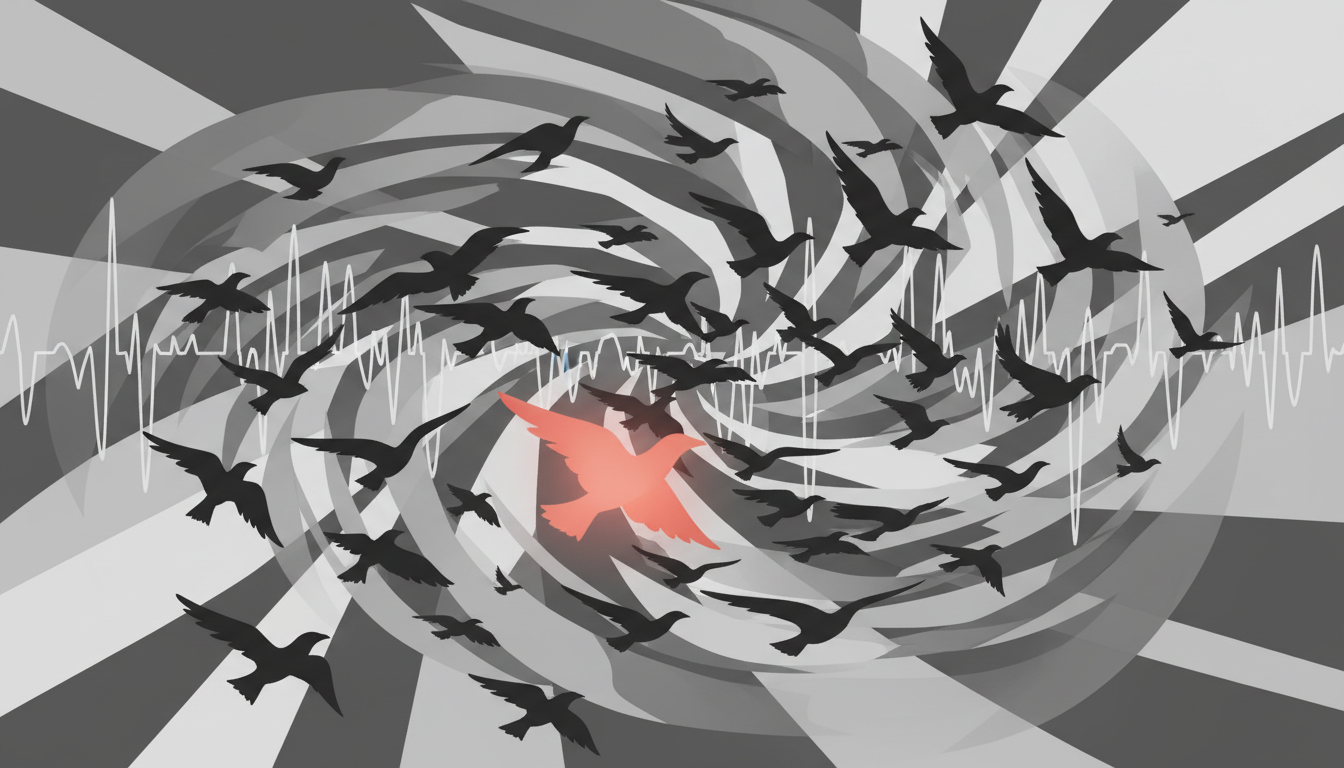
We live in an age of information abundance—and overwhelming chaos. The 24-hour news cycle delivers a constant stream of crises, disasters, and uncertainties directly into our pockets. Economic downturns, climate emergencies, geopolitical tensions, health threats: the bad news never stops rolling in. If you've noticed your chest tightening while scrolling, or felt an unnamed dread upon waking, you're not alone. News cycle anxiety is a real and increasingly common form of stress that affects our emotional regulation, sleep quality, and overall well-being.
The challenge isn't that we're too sensitive or too aware. It's that our nervous systems—designed for immediate, localized threats—are being asked to process an endless stream of distant, intangible dangers. Without intentional boundaries and coping strategies, media consumption can spiral into a source of chronic stress rather than informedness.
This guide offers practical, evidence-based approaches to help you stay informed without sacrificing your mental health.
Key Takeaways
- News cycle anxiety is a legitimate stress response to information overload, not a personal weakness
- Conscious media consumption (timing, selection, duration) directly reduces anxiety symptoms
- Emotional regulation techniques like the 5-4-3-2-1 grounding method and breathing work ease acute stress
- Curating your information diet means choosing trusted sources and setting boundaries, not burying your head
- Community connection and offline activities provide protective buffers against media-induced dread
- Self-compassion and reflection help you understand your personal anxiety triggers and thresholds
Understanding News Cycle Anxiety and Emotional Regulation
News cycle anxiety isn't vanity or oversensitivity—it's a predictable response to a particular modern stressor. Our brains evolved to respond to direct, immediate threats (a predator, a fire, a flood). But today's threat landscape is abstract, distant, and relentless. We learn about wildfires on another continent, pandemics we can't control, and political decisions that feel threatening but immovable.
This cognitive mismatch creates what psychologists call information-based stress. Our amygdala (the alarm system in our brain) can't distinguish between a tiger at the cave entrance and a headline about rising inflation. The nervous system responds the same way: cortisol rises, heart rate increases, and we shift into a state of low-grade vigilance.
Emotional regulation—our capacity to observe and modulate our emotional responses—becomes crucial. It's not about suppressing feelings or denying reality. Rather, it's about developing the space between the stimulus (the news headline) and your response, so you can choose how to engage rather than react automatically.
Research shows that people who struggle with emotional regulation are significantly more vulnerable to media-induced anxiety. The good news? Emotional regulation is a skill that can be strengthened with practice.
Stress Management Through Mindful Media Consumption
The most powerful stress management tool at your disposal is often the simplest: reducing your exposure. This doesn't mean becoming uninformed; it means being intentional.
Set specific times for news consumption
Rather than letting notifications dictate your day, choose one or two designated windows—perhaps 15 minutes in the morning and 15 minutes in the evening. This prevents the constant micro-doses of stress that come from checking headlines throughout the day.
Curate your sources
Not all news outlets are equal. Seek out sources that:
- Report verified facts with clear distinction between opinion and reporting
- Provide context and background (not just sensationalism)
- Balance coverage of problems with potential solutions
Quality journalism exists; you may need to search beyond the algorithmic feeds designed to keep you scrolling.
Use technology wisely
- Turn off push notifications for news apps
- Unfollow accounts that trigger doom-scrolling
- Use app timers to limit social media use
- Consider a "no screens one hour before bed" boundary to protect sleep quality
The 3-day rule
When you encounter distressing news, wait three days before deciding how seriously to engage. Often, the initial emotional spike subsides, and you can approach the topic with greater clarity. This prevents reactive panic while still allowing you to stay informed.
Pay attention to how you feel
After consuming news for 15 minutes, pause and notice: Do you feel more informed or more anxious? More empowered or more helpless? Your emotional response is data. If a particular source consistently leaves you spiraling, it may not be serving you.
Anxiety Coping Techniques You Can Use Right Now
When anxiety spikes—whether from a headline or a notification—having concrete coping tools helps interrupt the stress cascade. These techniques work best when practiced regularly, not just in crisis moments.
The 5-4-3-2-1 Grounding Technique
This sensory-focused method interrupts anxiety by anchoring your attention to the present moment:
- Name 5 things you can see around you (a lamp, a plant, a crack in the wall—anything specific)
- Name 4 things you can physically feel (the chair supporting you, your feet on the ground, the texture of your clothing)
- Name 3 things you can hear (traffic, a fan, ambient sounds)
- Name 2 things you can smell (coffee, flowers, the air in the room)
- Name 1 thing you can taste (residual toothpaste, water, a mint)
This technique bypasses the anxious brain's narrative and taps into sensory reality. It typically takes 2-3 minutes and can be repeated as needed.
Box breathing for immediate calm
When you notice your chest tightening or breathing shallowing:
- Inhale for a count of 4
- Hold for a count of 4
- Exhale for a count of 4
- Hold for a count of 4
- Repeat 5-10 times
The physiological effect is measurable: slow, rhythmic breathing signals to your nervous system that you're safe.
The worry window
Set aside 15 minutes as your official "worry time." When anxious thoughts arise outside this window, write them down and tell yourself, "I'll think about this during worry time." This contains anxious spiraling while honoring the reality of your concerns. During worry time, you can examine your worries more objectively: Which ones require action? Which ones are beyond your control?
Creating Your Personal Mental Wellness Plan
Coping with news cycle anxiety isn't one-size-fits-all. Understanding your unique stress response is essential.
Identify your personal anxiety triggers
Is it specific topics (politics, climate, economics)? Specific sources? Certain times of day? A particular social media platform? Spend a week noticing patterns. You might recognize that reading news before bed guarantees insomnia, or that Twitter feeds trigger deeper anxiety than newspaper articles.
Distinguish between information and anxiety
Ask yourself: "Is this making me more informed, or more afraid?" Some exposure to difficult news is necessary for citizenship and awareness. But there's a threshold beyond which additional exposure adds anxiety without adding information. Find your threshold.
Build a protective framework
Mental wellness in the face of media stress requires multiple supports:
- Physical health: Prioritize sleep, movement, and nutrition. These are the foundation of emotional resilience.
- Social connection: Isolation amplifies anxiety. Regular contact with trusted people buffers against media-induced despair.
- Offline activities: Gardening, cooking, exercise, art, time in nature—activities that engage your body and senses—are powerful stress antidotes.
- Meaningful action: When possible, channel concern into concrete action (volunteering, supporting causes you believe in). This converts helplessness into agency.
- Reflection and self-compassion: Notice your anxiety without judgment. "I'm noticing anxiety about the news right now, and that's understandable" is more helpful than "I shouldn't be so anxious."
If you find yourself struggling to regulate despite these strategies, consider starting with a free assessment to explore your patterns more deeply. Understanding your specific stress profile can help you tailor your approach even more effectively.
Practical Exercise: Your Media Consumption Audit
Spend the next week tracking your news consumption. Note:
- When you consumed news (time of day)
- Where you consumed it (platform, app, source)
- What type of news (topic, tone)
- Your state before: energy level, mood, stress
- Your state after: energy level, mood, stress (on a scale of 1-10)
- Duration: how long did you consume?
After a week, review your audit. Look for patterns:
- Which sources or topics consistently leave you more anxious?
- Are there times of day when you're more vulnerable?
- How long until your mood typically returns to baseline after consuming news?
Use this data to adjust your personal media consumption plan. Perhaps you avoid news apps in the morning, limit your intake to 10 minutes before evening, or swap one source for another. Small, intentional changes often yield significant improvements in anxiety levels.
FAQ
What if I feel guilty for not staying informed about every crisis?
A: Staying informed doesn't require consuming everything. Choose 2-3 trusted sources and give yourself permission to know less about some topics. You can care deeply about the world while also respecting your own mental health. Burnout doesn't serve anyone. Informed citizenship comes from thoughtful engagement, not exhaustive consumption.
Can news cycle anxiety actually affect my physical health?
A: Absolutely. Chronic stress from news consumption triggers sustained elevation of cortisol and adrenaline, which can impair sleep, weaken immunity, increase inflammation, and elevate blood pressure. This isn't anxiety "in your head"—it's real physiological stress. Managing news consumption is a legitimate health intervention.
Is there a "right" amount of news to consume?
A: It's deeply individual. For some people, 10 minutes daily is enough; others need more to feel informed. The metric isn't duration but effect. If you're informed without excessive anxiety, you've found your balance. If you're anxious and uninformed, or informed and anxious, you need to adjust.
What about staying informed during actual crises (pandemic, natural disaster, etc.)?
A: During acute crises, update frequency may legitimately need to increase—but still with boundaries. Focus on official, trusted sources (health departments, emergency management) rather than social media. Set a schedule (e.g., updates at specific hours) to prevent constant checking. Balance crisis updates with grounding activities. And remember: you don't need to know everything happening in real time to respond appropriately.
How do I help family members or friends who struggle with news cycle anxiety?
A: Lead by example with your own healthy media practices. Avoid shaming or dismissing their concerns. Validate that news cycle anxiety is real, then gently suggest some of the strategies outlined here. Invite them to offline activities. Sometimes the best support is simply spending time together without screens—a quiet reminder that the world also contains connection, beauty, and presence.
Your Path Forward
News cycle anxiety is a real consequence of living in the information age. But it's not inevitable, and it's not a personal failing. With conscious boundaries, practical coping techniques, and a compassionate approach to yourself, you can stay informed without letting anxiety run your life.
Start small. Pick one strategy—perhaps setting designated news times, or practicing the 5-4-3-2-1 grounding technique—and commit to it for a week. Notice the difference. Then layer in other practices as they feel manageable.
Your nervous system is trying to protect you. With these tools, you can help it understand the difference between real, immediate threats and distant, intangible ones. You can stay aware of the world without being consumed by it.
You deserve to feel grounded, informed, and at peace.